Collecting Japanese Anime Blu-rays and Art Cards
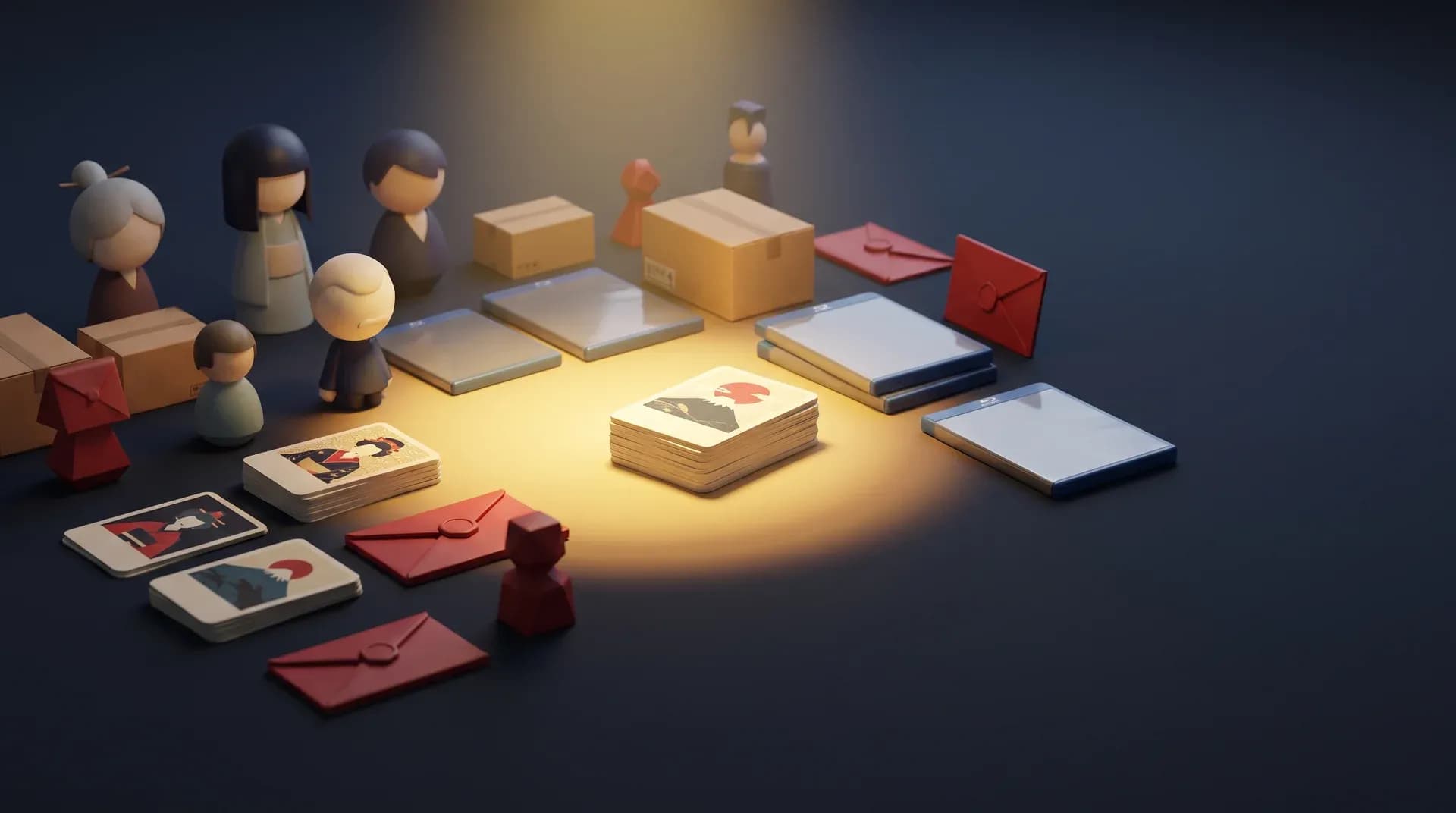
The physical media market in Japan is not about convenience; it is about the object. For a serious collector, a disc is simply the vehicle for the tangible assets—the art cards, the mini-posters, and the high-grade packaging. When a title like 100 Meters is released on Blu-ray by GKIDS on December 1, the value is concentrated in the Collector's Edition, which includes 5 art cards and a mini-poster. This is the primary driver for physical acquisition in an era of streaming.
This guide is for collectors who prioritize physical ownership and the preservation of limited-edition inserts. Whether you are tracking new series like Battle Spirits or awaiting the 2027 premiere of Walking Home with You, understanding the lifecycle of a Japanese release is the only way to avoid paying inflated aftermarket prices. Collecting Japanese anime Blu-rays requires a shift in mindset from consuming content to acquiring curated artifacts.
Why It Matters Right Now
!Why It Matters Right Now visual for Collecting Japanese Anime Blu-rays and Art Cards Figure 1: Why It Matters Right Now

Timing is the most critical variable in the collectibles market. When an anime is announced, such as the upcoming Part 4 of Ascendance of a Bookworm, a window opens for collectors to secure early-run merchandise and media. The gap between a series premiere and its physical home video release is where the most value is captured. If you wait until a series has finished its run and the limited editions are sold out, you are no longer buying from a distributor; you are buying from a reseller.
Recent releases show a trend toward high-density "Collector's Editions" that bundle multiple art assets. According to Anime News Network, the 100 Meters Blu-ray specifically targets this desire with its art card bundle. This shift toward physical inserts makes these items more like trading cards than movies. For those already [collecting Japanese exclusive merch this fall](/blog/collecting-japanese-exclusive-merch-fall-2026), these Blu-ray bundles are the most efficient way to acquire official, high-quality art that is rarely sold separately.
The Rise of "Tokuten" (Store-Exclusive Bonuses)
In Japan, the battle for physical media sales is fought through Tokuten (店舗特典), which translates to store-exclusive bonuses. Production committees partner with major retail chains—such as Animate, Gamers, Toranoana, Sofmap, and Amazon Japan—to offer unique physical incentives. If you purchase the same Blu-ray volume from Animate, you might receive a set of three exclusive 4" x 6" art cards featuring the main protagonist. If you buy it from Amazon Japan, you might receive an exclusive fabric poster (typically B2 size) featuring the female lead.
This fragmentation means that "collecting Japanese anime Blu-rays" is not just a matter of selecting a single edition; it requires researching which retailer has secured the rights to the specific illustrations you want to own. This level of curation turns physical media into a highly personalized gallery.
The Play: Step-by-Step
!The Play: Step-by-Step visual for Collecting Japanese Anime Blu-rays and Art Cards Figure 2: The Play: Step-by-Step

Securing a limited edition Blu-ray from Japan requires a proactive pipeline. You cannot rely on local retail availability for high-demand titles. Follow this specific workflow to ensure you get the Collector's Edition before it hits the secondary market.
Step 1: Track the Announcement Cycle
Monitor sites like Anime News Network for the first mention of a TV anime premiere. For example, the Battle Spirits premiere on Tuesday signals that physical media planning is already underway. Note the production studio and the licensing partner. This step takes 15 minutes a week of browsing and establishes your "watch list" for the next 6 to 12 months. Set up a dedicated spreadsheet or Notion database to log:
- The Japanese and English titles of the anime
- The production committee leads (e.g., Aniplex, Bandai Namco Arts, Pony Canyon)
- The estimated broadcast run (e.g., 12 episodes vs. 24 episodes)
- The anticipated physical release window (typically 3 to 6 months post-premiere)
Step 2: Identify the Distributor Tier
Determine if the release is being handled by a Japanese domestic label or an international partner like GKIDS or Crunchyroll. Domestic releases often have "First Press Limited Editions" (初回限定版 - Shokai Genteiban) that include booklets or art cards. International releases may have different bundle contents. Check the official distributor's product page the moment the pre-order window opens.
Domestic Japanese releases are usually split into multiple thin volumes (often containing only 2 to 3 episodes per volume, priced between ¥8,000 and ¥10,000 JPY), whereas Western releases tend to pack 12 to 24 episodes into a single box set. If your goal is high-density physical art cards, the domestic Japanese First Press editions feature superior paper weight (typically 300gsm to 350gsm cardstock) and premium finishes like gold-foil stamping or matte soft-touch lamination.
Step 3: Set Up Pre-Order Alerts with Proxy Services
Use a proxy service or a direct Japanese retail account (such as AmiAmi, CDJapan, or Amazon Japan) to set alerts for the specific title. Do not search for the title manually every day. Use the Japanese title in Kanji to find listings that may not have English translations yet. For example, search for "100メートル ブルーレイ 初回" instead of "100 Meters Blu-ray Limited".
If you are using a proxy service like Neokyo, ZenMarket, or Buyee, configure automated keyword notifications. This ensures you are notified within minutes of the pre-order going live, which is often the only time Collector's Editions are available at MSRP. Be prepared to lock in your pre-order immediately; high-demand titles from studios like Kyoto Animation or Ufotable can sell out their First Press allocation within 48 hours.
Step 4: Verify Region Coding, Format, and Subtitle Status
Before purchasing, confirm the Blu-ray region and video specifications. Most Japanese Blu-rays are Region A (which includes North America, Japan, South Korea, and Southeast Asia), making them physically compatible with US Blu-ray players. However, European collectors must ensure they have a region-free player, as Europe is Region B.
More importantly, check for subtitles. Domestic Japanese Blu-rays rarely include English subtitles unless explicitly stated (look for "英語字幕" or "English Subtitles"). If you require subtitles to watch the content, you may need to wait for a Western licensing partner like GKIDS to distribute the physical edition. Additionally, verify that the art cards are listed as "exclusive to the first press." If they are, you must purchase during the pre-order phase. A purchase made three months after release will likely result in a "Standard Edition" without the inserts.
Step 5: Secure Protective Archival Storage
The moment the package arrives, remove the art cards and mini-posters from the Blu-ray sleeve. Do not leave them inside the plastic case where they can be subjected to pressure marks from the disc hub or paper warping due to temperature changes. Use professional, acid-free archival sleeves:
- For standard 4" x 6" art cards: Use Ultra PRO or BCW 4" x 6" postcard sleeves, paired with rigid 35pt top-loaders to prevent bending.
- For mini-posters (typically B4 or A4 size): Use archival-grade Mylar sleeves with acid-free backing boards.
- For larger posters (B2 size): Store them flat in a professional artist portfolio folder rather than keeping them rolled up, which causes permanent fiber creasing over time.
Keep your storage environment at 35% to 45% relative humidity and away from direct UV sunlight to prevent ink fading. This process takes 30 minutes per release but preserves the long-term integrity of the collection.
Step 6: Cross-Reference with Merchandise Drops
Use the anime's release schedule to time your other purchases. When a new visual is revealed, such as the one for Walking Home with You for its April 2027 premiere, it often signals a coming wave of figures, acrylic stands, and physical media announcements. By syncing your Blu-ray acquisition with these drops, you can combine shipments at your proxy warehouse, saving significantly on international shipping fees. This allows you to build a complete set of a character's assets from a single season without paying multiple flat-rate international courier fees.
Real-World Example: The "100 Meters" Acquisition
Let's analyze what a disciplined acquisition strategy looks like in practice, focusing on the film 100 Meters released on December 1. Instead of waiting for the release date to browse local retail shelves, a collector executes a pre-planned strategy targeting the GKIDS Collector's Edition. Their primary objective is to secure the physical package containing the 5 exclusive art cards and the mini-poster in pristine condition.
The Cost-Benefit Ledger: Pre-Order vs. Aftermarket
Below is a realistic breakdown of the costs associated with securing this release via early pre-order versus purchasing from secondary market resellers six months after the print run has ended.
| Expense Category | Proactive Pre-Order (MSRP) | Aftermarket Reseller (6 Months Post-Release) | | :--- | :--- | :--- | | Collector's Edition Blu-ray | $39.99 | $110.00 (Out of Print premium) | | Domestic Shipping / Proxy Fee | $5.00 | $12.00 | | International Shipping (DHL/EMS) | $22.00 | $28.00 | | Archival Protection Supplies | $1.50 (Sleeves + Top-loaders) | $1.50 | | Total Financial Cost | $68.49 | $151.50 | | Total Time Invested | 1.5 hours (tracking & ordering) | 4+ hours (scouring eBay/Mandarake) | | Condition Guarantee | Mint (Factory Sealed) | Variable (Risk of corner dings/scratches) |
Execution of the Play
- July: The collector reads the announcement on Anime News Network regarding the December 1 release of 100 Meters. They immediately add the release date and distributor details to their tracking spreadsheet.
- August: The pre-order window opens on the distributor's storefront. The collector places their order immediately, securing the guaranteed First Press edition containing the 5 art cards and the mini-poster.
- December 5: The package arrives. The collector sets up a clean, dust-free workspace. Wearing cotton archival gloves, they carefully unseal the outer plastic wrap, ensuring they do not tear the hype sticker (which they preserve by sticking it onto a backing sheet).
- Archiving: They extract the 5 art cards. Using a precision LED desk lamp, they inspect the edges for any factory-cutting defects. They slide each card into an acid-free sleeve and then insert them into rigid 35pt top-loaders. The mini-poster is placed flat in a B4-sized archival portfolio.
- Result: By spending $68.49 and approximately 90 minutes of total active effort across several months, the collector has acquired a pristine, complete physical set. Six months later, when the print run is exhausted and the film gains a cult following, other collectors are forced to pay upwards of $150.00 on the secondary market for sets that frequently feature bent corners or missing inserts. This is the same disciplined approach used when [buying authentic Ghibli character goods](/blog/buying-authentic-ghibli-character-goods), where provenance and condition dictate long-term value.
Caveats and Pitfalls to Avoid
This strategy does not work for collectors who only care about the video content. If you just want to watch the show, streaming is more efficient. The effort of tracking pre-orders and archiving inserts is only justified if you value the physical object as a piece of art.
The "Standard Edition" Trap
Avoid the common mistake of ordering the "Standard Edition" by mistake—a frequent error when using auto-translated Japanese listings where "Limited" and "Standard" can look identical. To ensure you are getting the art cards, look specifically for the kanji "初回限定版" (First Press Limited Edition) or "特装限定版" (Tokusou Genteiban - Special Limited Edition). If the price is 20-30% lower than the average across AmiAmi or CDJapan, you are almost certainly looking at the Standard Edition, which contains only the disc and a basic case.
The Shipping Weight Penalty
Shipping a single Blu-ray from Japan is a financial trap. While the disc case is light, a Collector's Edition with a heavy-gauge cardboard slipcase, a 100-page art book, and protective bubble wrap often pushes the parcel weight over 800g. If you ship a single item via DHL or FedEx, the shipping cost can easily equal or exceed the MSRP of the disc itself.
To optimize your spend, leverage your proxy's consolidation window (usually 30 to 45 days). Bundle your Blu-ray with smaller, high-value items like [Starbucks Japan Pokémon goods](/blog/starbucks-japan-pokemon-goods-guide) or acrylic stands. This spreads the base international courier fee across multiple items, reducing the "per-item" shipping cost and making the acquisition of domestic Japanese volumes economically viable.
Action Items
- Create Your Tracker: Build a spreadsheet of upcoming 2026-2027 anime premieres using Anime News Network to anticipate physical media windows.
- Acquire Archival Supplies: Purchase a pack of acid-free archival top-loaders (4" x 6" size) and Mylar sleeves to protect art cards from the 100 Meters Blu-ray or similar limited editions.
- Configure Proxy Searches: Set up a Japanese-language keyword alert for "初回限定版" (First Press Limited Edition) and "店舗特典" (Store Bonus) on your preferred proxy shopping service.
- Check Your Hardware: Verify that your Blu-ray player or console is compatible with Region A discs, or invest in a dedicated region-free player to handle domestic Japanese formats.
Join our community for more expert guides on securing rare Japanese imports by visiting /newsletter.
Frequently Asked Questions
How do I know if a Blu-ray is a Collector's Edition?
Look for terms like "Limited Edition," "Collector's Edition," or the Japanese "初回限定版" (Shokai Genteiban). These versions will explicitly list bonus items such as art cards, mini-posters, or booklets in the product description. Standard editions will only list the disc and a basic plastic case.
Are Japanese Blu-rays compatible with US players?
Most Japanese Blu-rays are Region A, which is the same region as North America, making them compatible with US players. However, always check the region code on the back of the case or the product listing to be certain before purchasing, as some special releases or DVD extras may be region-locked or formatted in PAL/NTSC standards that require specific hardware.
What is the value of the 100 Meters art cards?
While specific market prices fluctuate, the Collector's Edition of 100 Meters includes 5 art cards as a bundle. The value lies in their exclusivity; these are typically not sold separately, making the Blu-ray the only official source for these specific prints. On the secondary market, individual cards from popular franchises can sell for $15.00 to $30.00 USD each to fans who do not want to purchase the entire home video release.
When should I start looking for Blu-rays of a new anime?
Start tracking the series the moment the TV anime premieres. For example, since Battle Spirits premiered in October, the planning for physical media begins immediately. You should be monitoring distributor announcements 3 to 6 months after the premiere date, as this is when pre-order windows for the first physical volumes typically open.
Related reading
- [Gundam Base Mall of America Opens September 30 for Collector](/blog/gundam-base-mall-america-opening-september-collectors)
- [Studio Ghibli Noritake Ceramics: Collector Guide](/blog/studio-ghibli-noritake-ceramics-collector-guide)